
Summary

Clustering
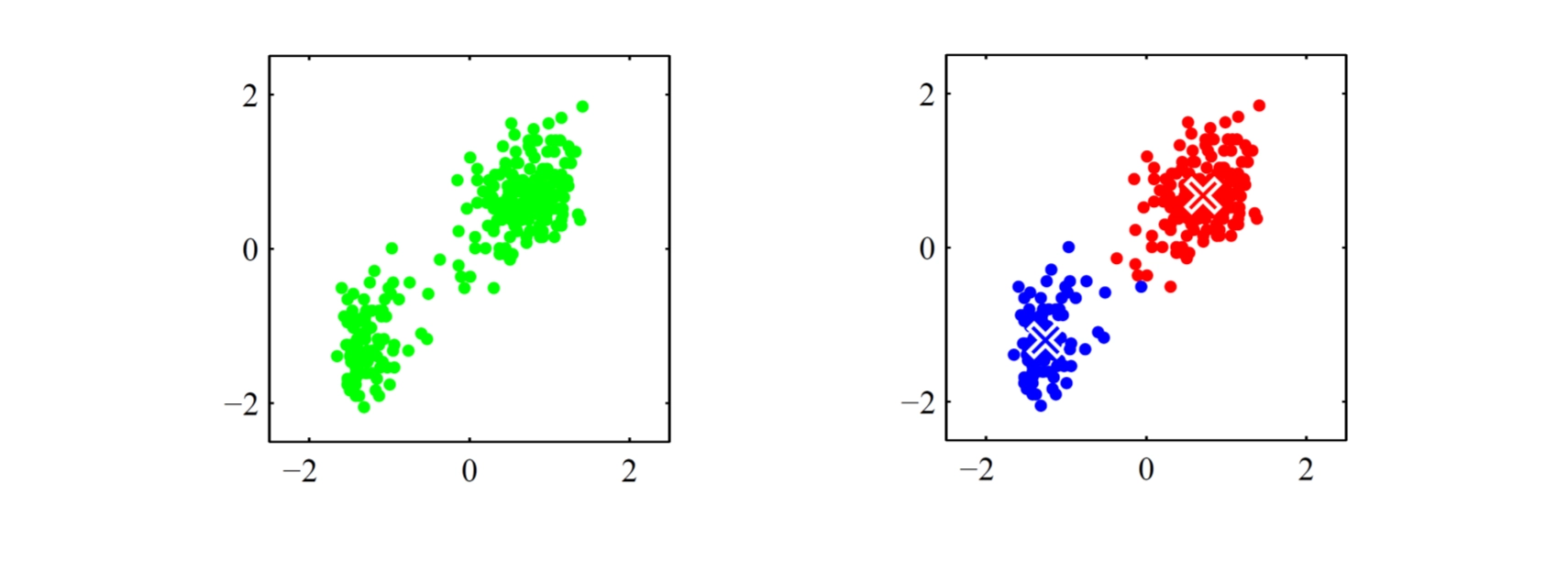
Given: a set of adata points (feature vectors) without labels
Output: group the data into some clusters, which means
•
assign each point to a specific cluster
•
find the center (representative / prototype / … ) of each cluster
•
Formal Definition
Given: data points and #clusters we want
Output: group the data into clusters, which means
•
find assignment for each data point and
such that
•
find the cluster centers
•
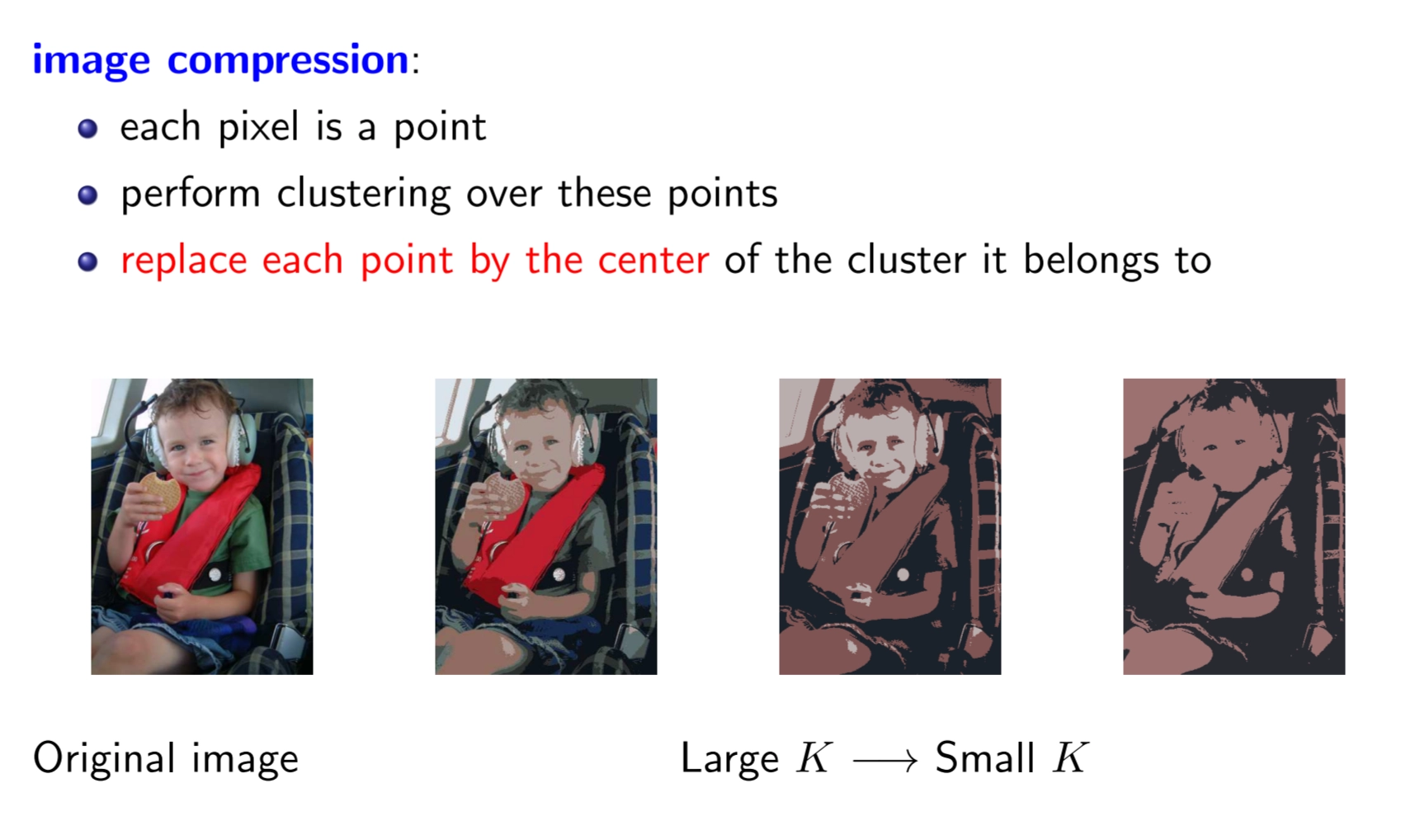
Example
•
Turn it into optimization problem

◦
using K-means Objective
◦
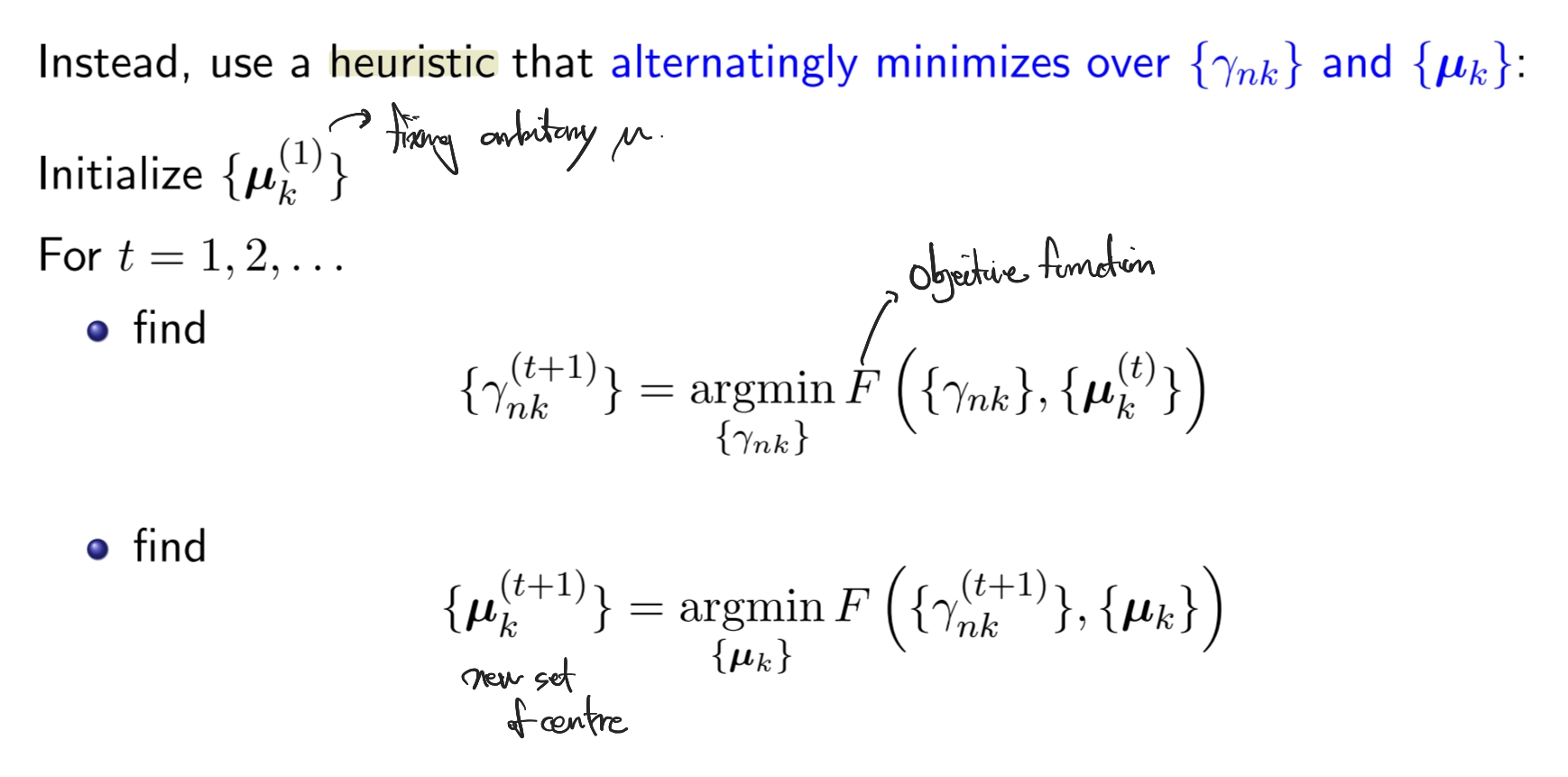
Alternative
◦
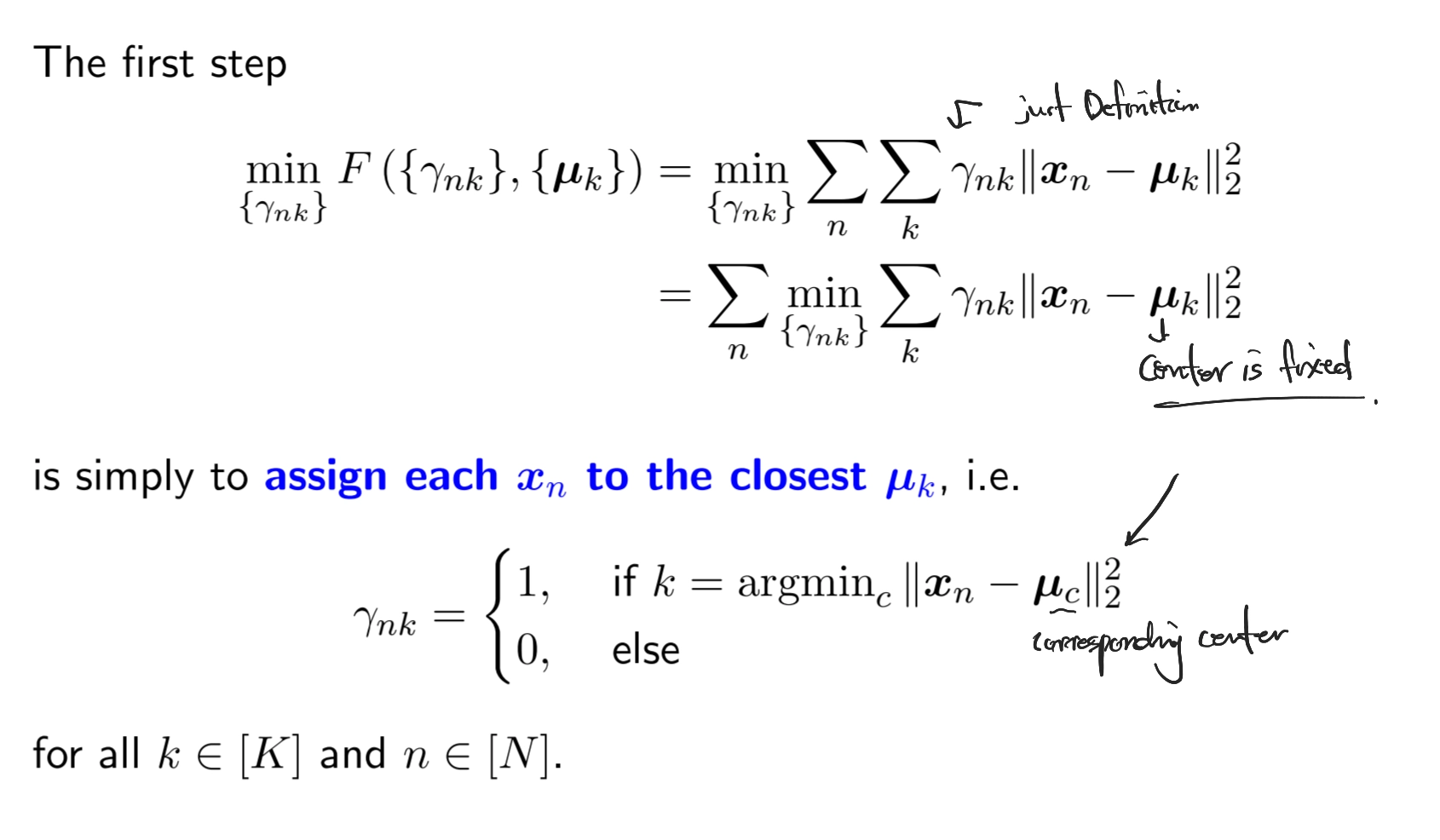
Closer Look
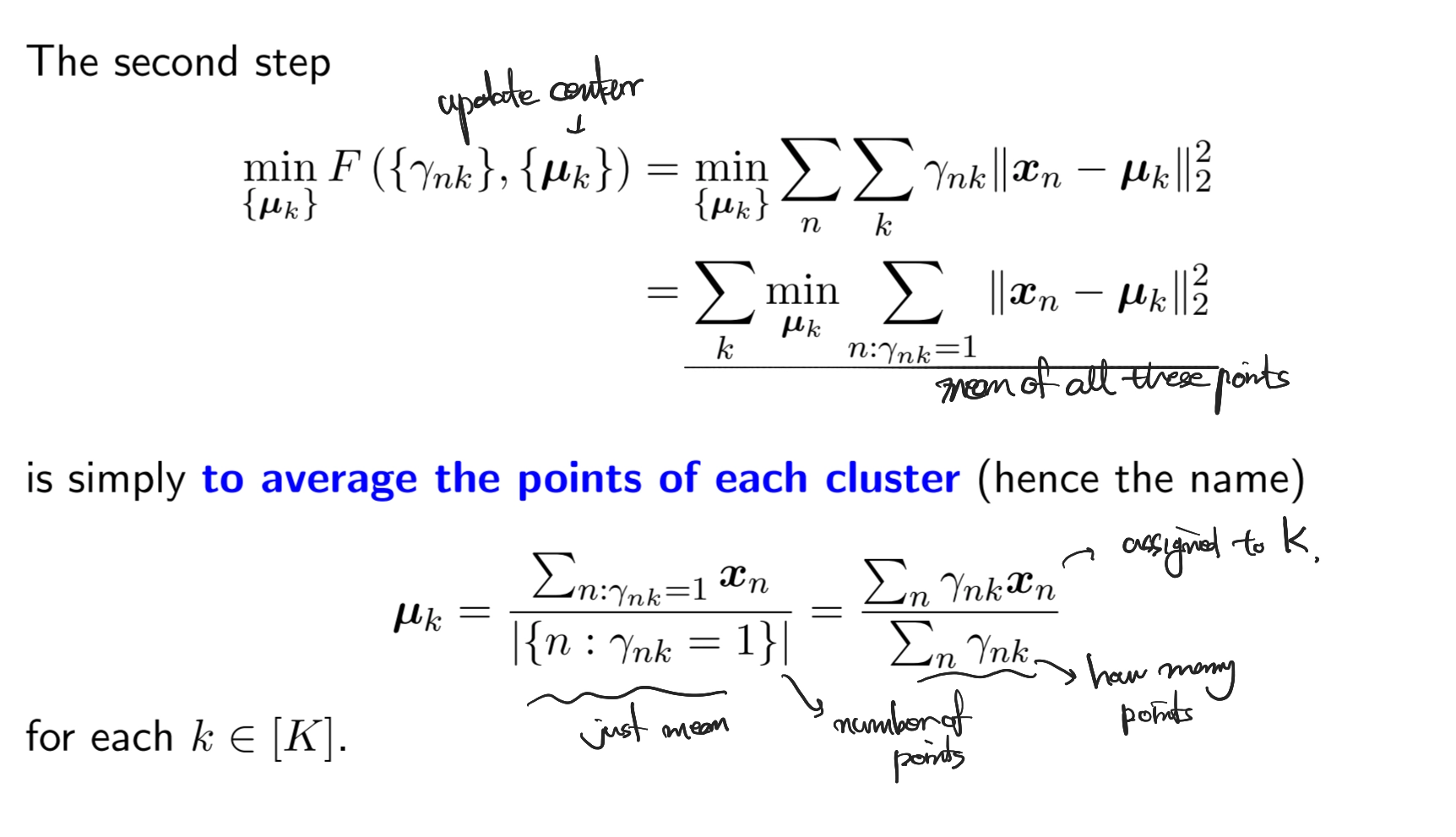
•
K-means Algorithm
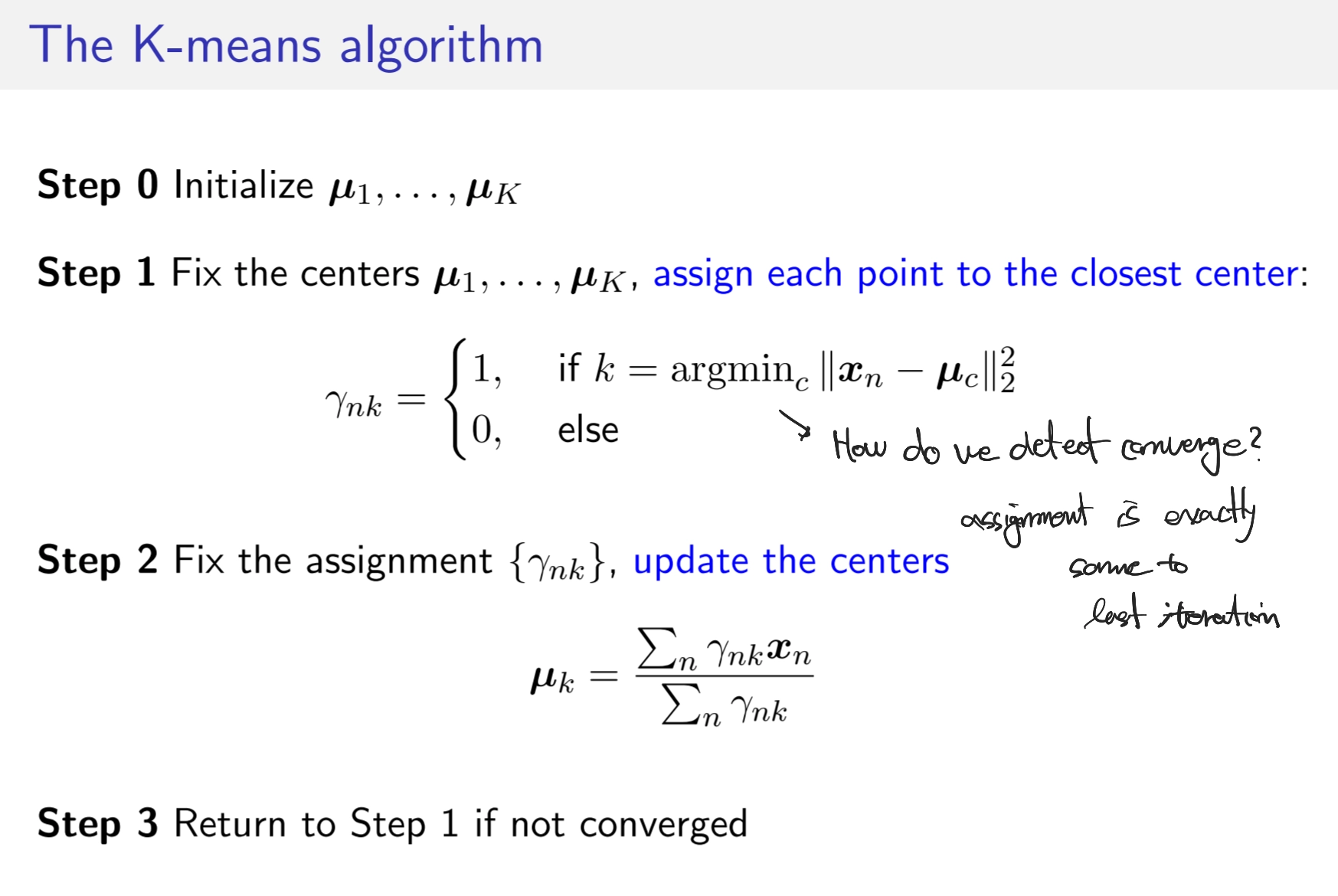
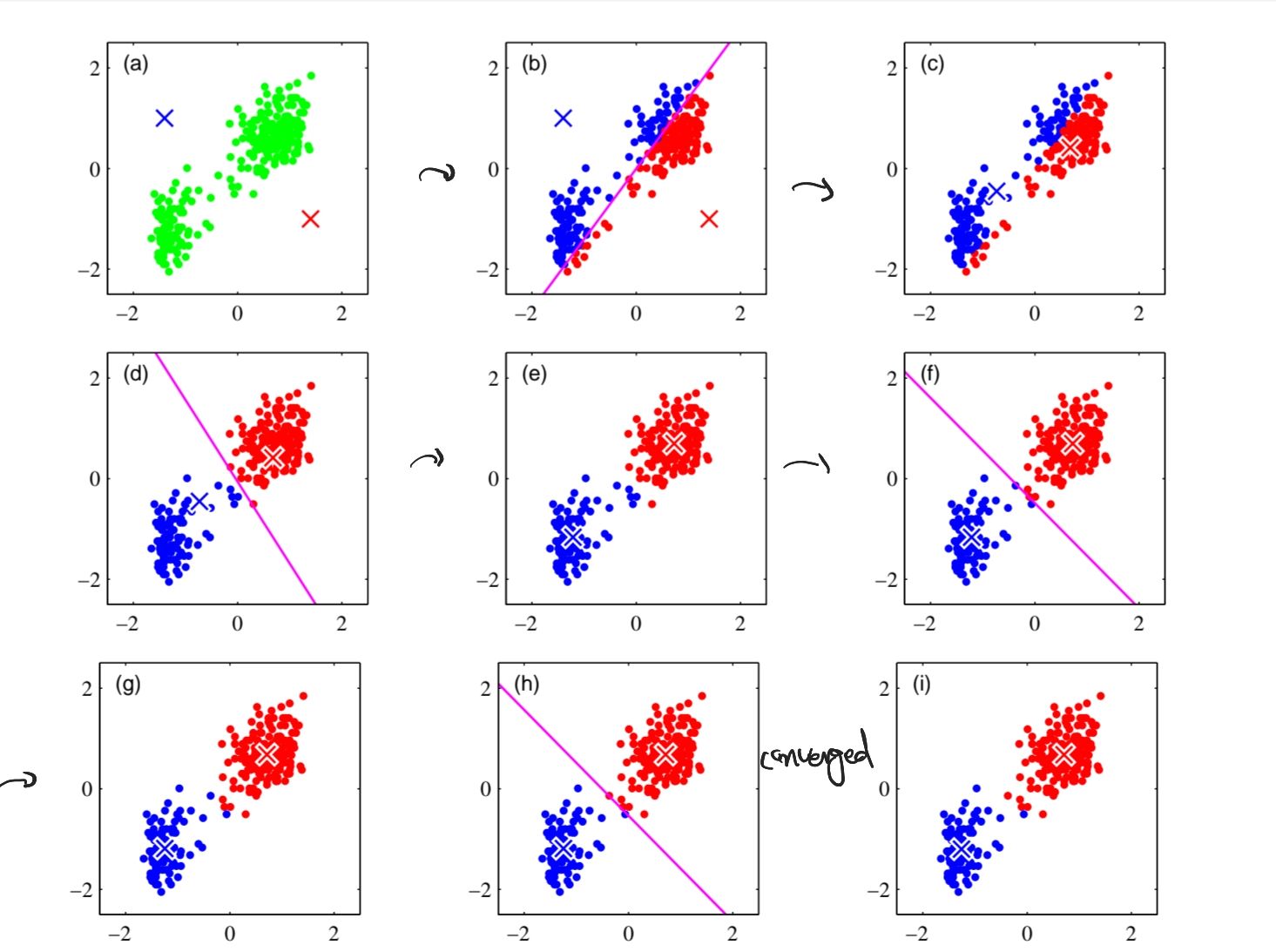
•
How to initialize it?
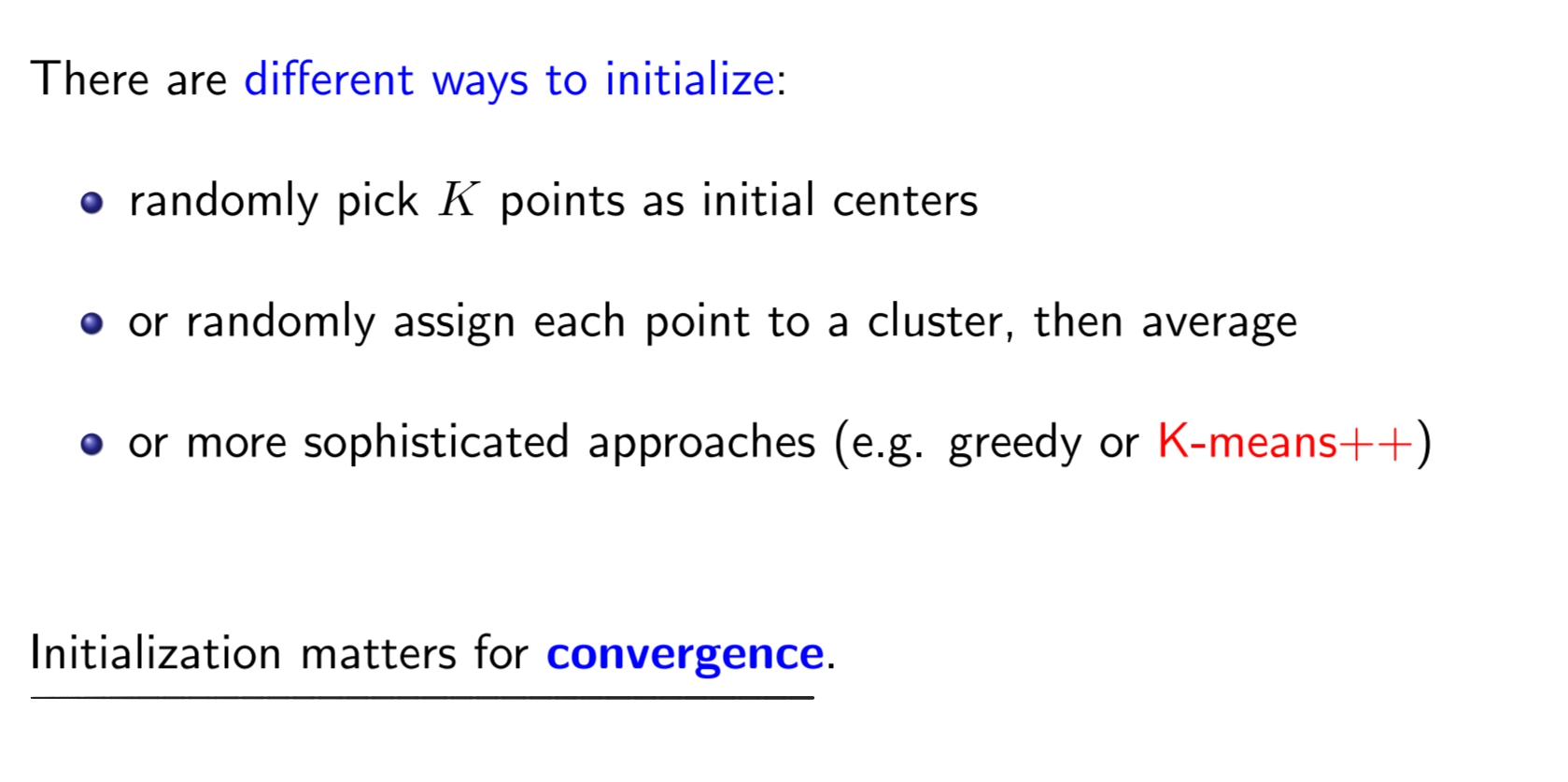
◦
Why initialization matters?
▪
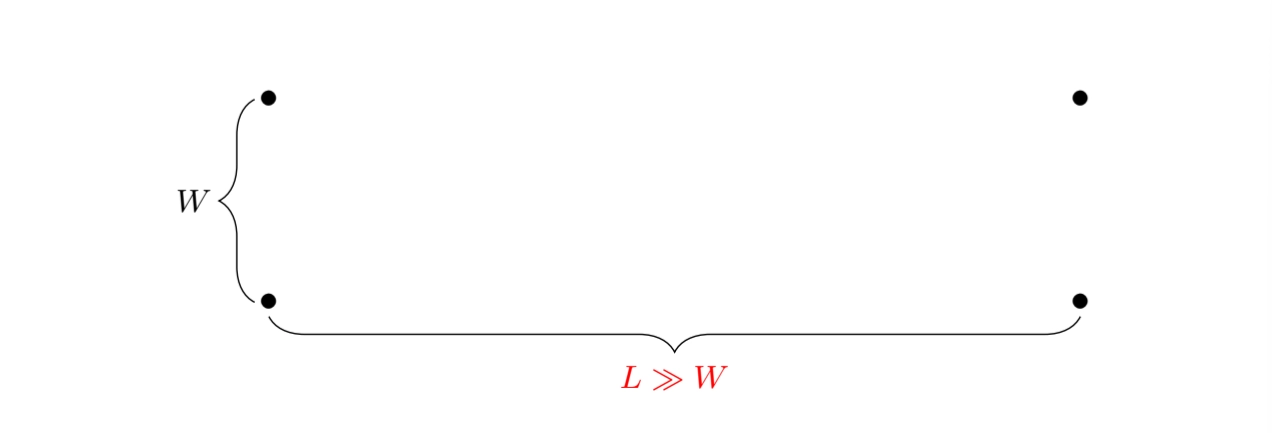
Simple example: 4 data points, 2 clusters, 2 different initializations
•
randomly
•
Greedy Approach
•
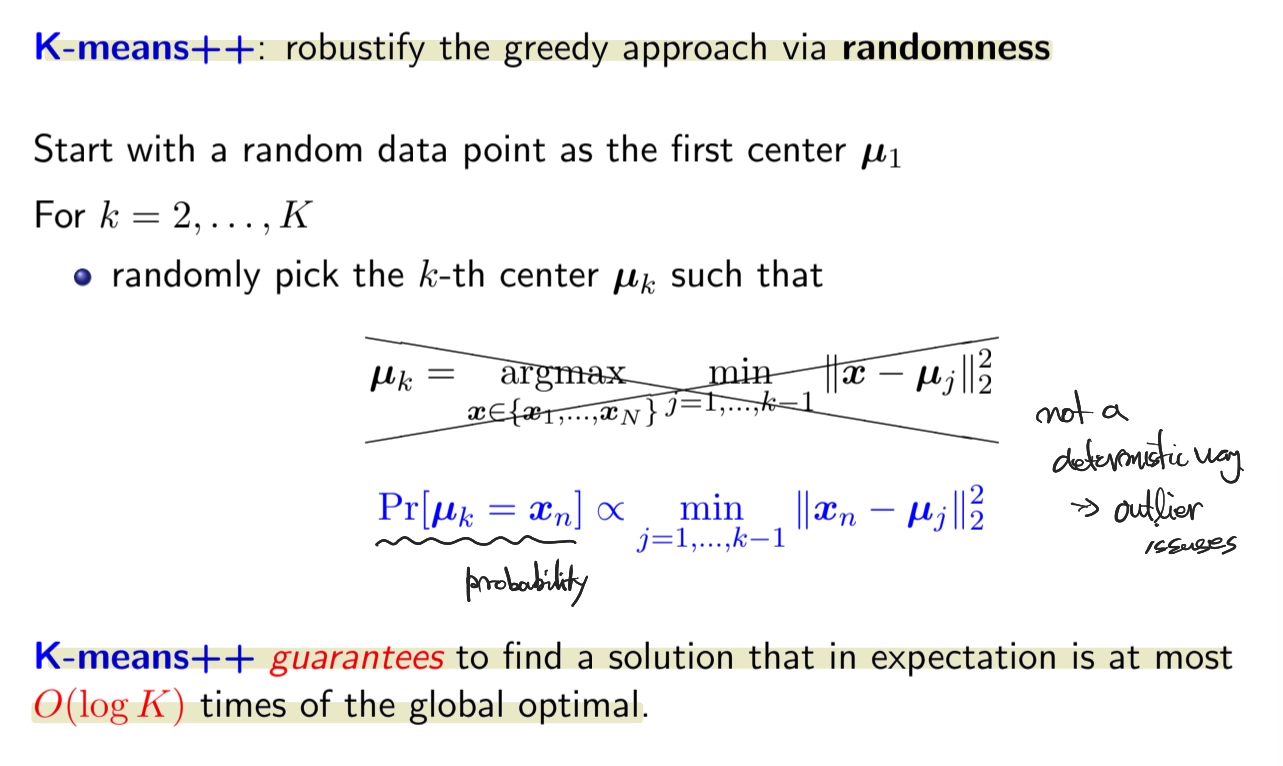
K-means++
◦
expected K-means objective
Gaussian Mixture Model (GMM)
•
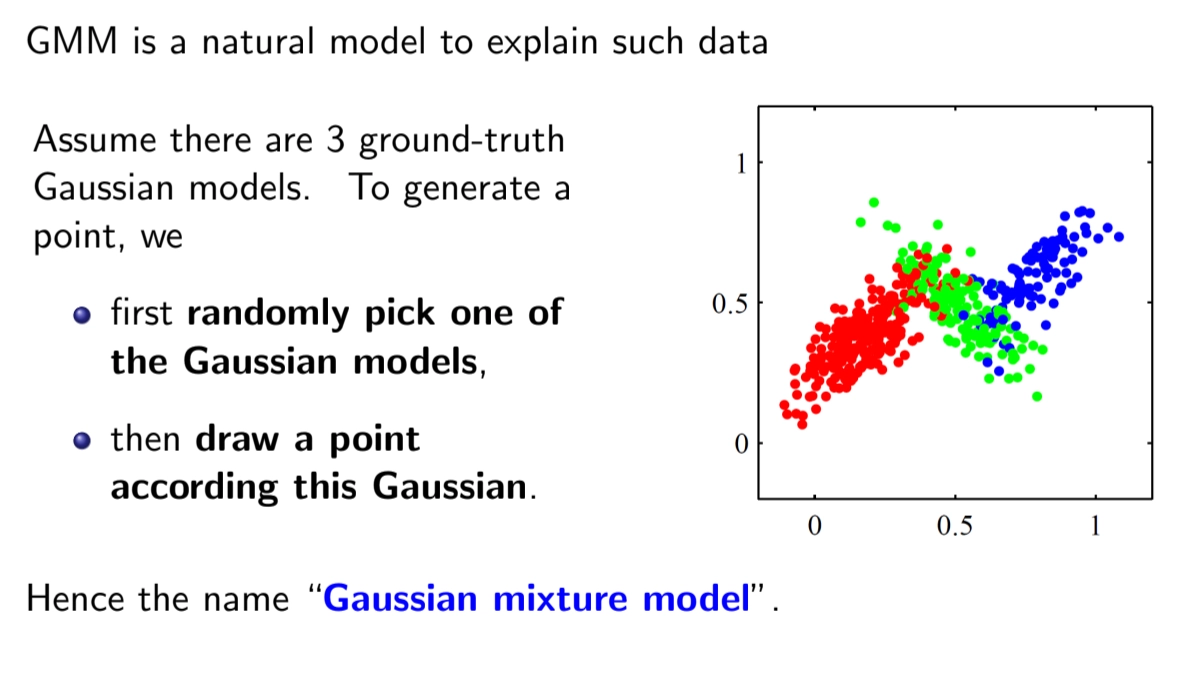
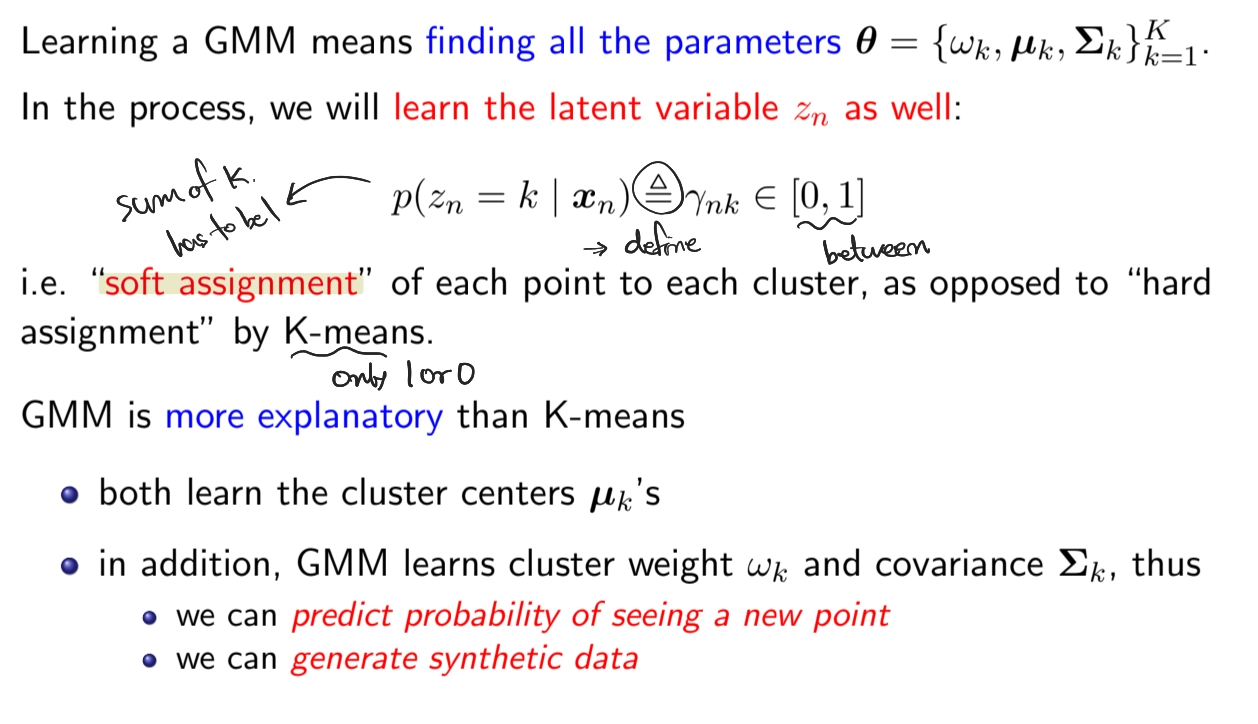
GMM is a probabilistic approach for clustering
◦
more explanatory than minimizing the K-means objective
◦
can be seen as a soft version of K-means
•
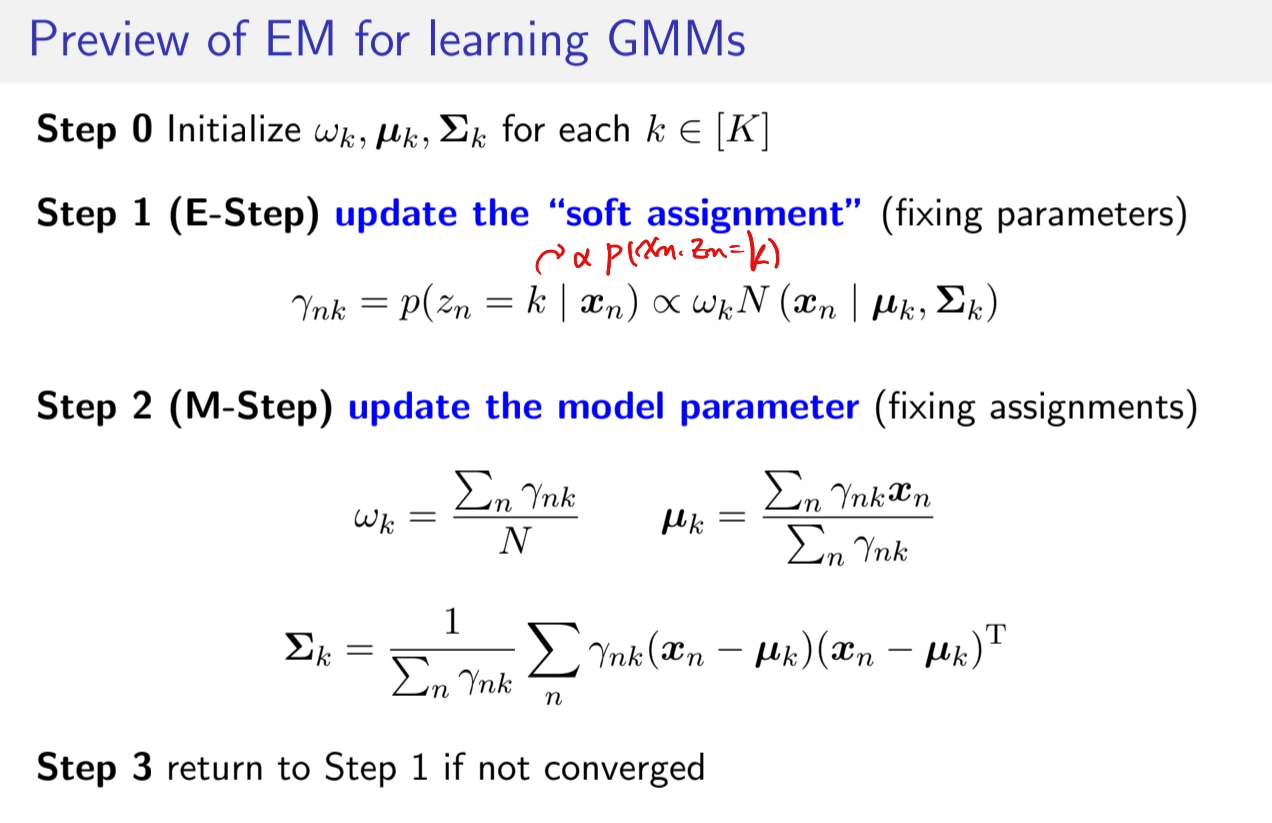
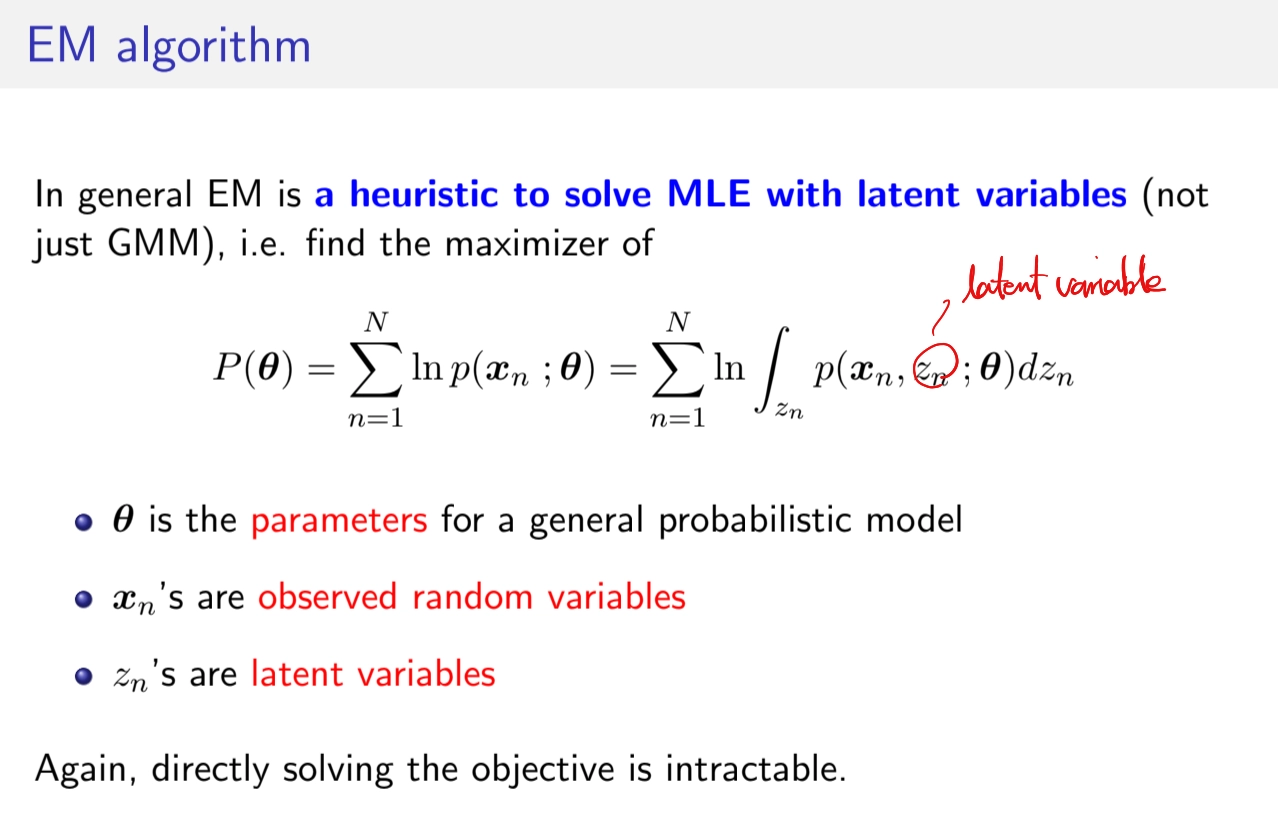
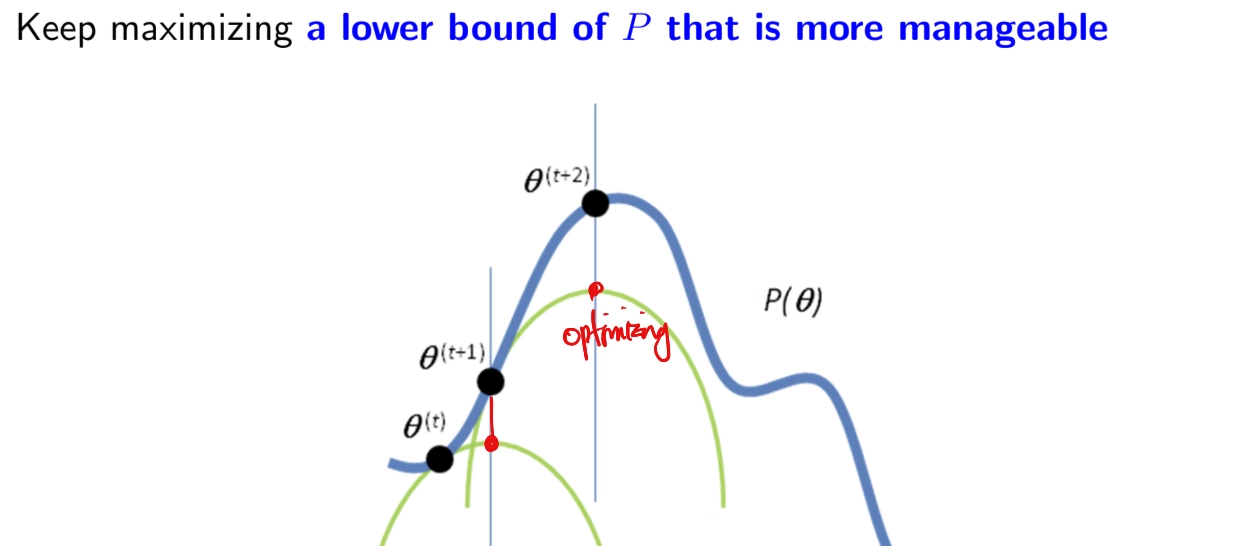
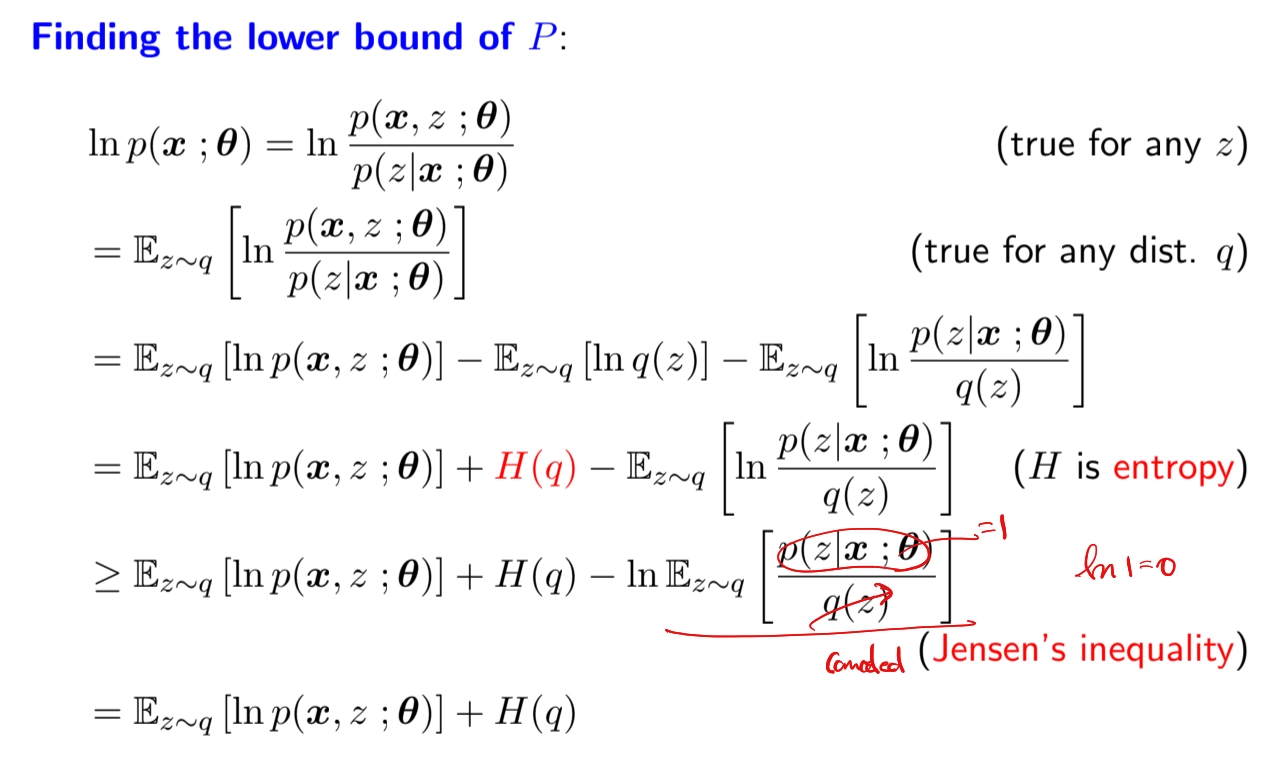
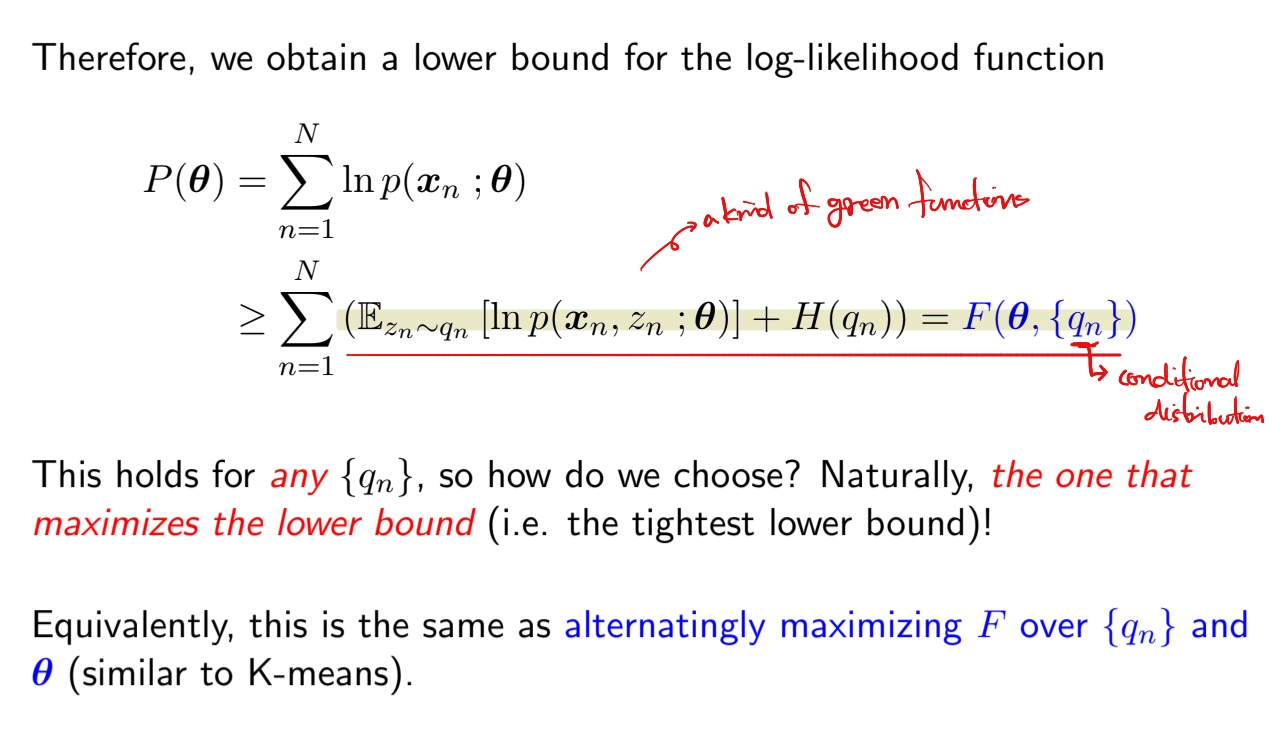
Expectation-Maximizatoin (EM) algorithm
•
Formal Definition
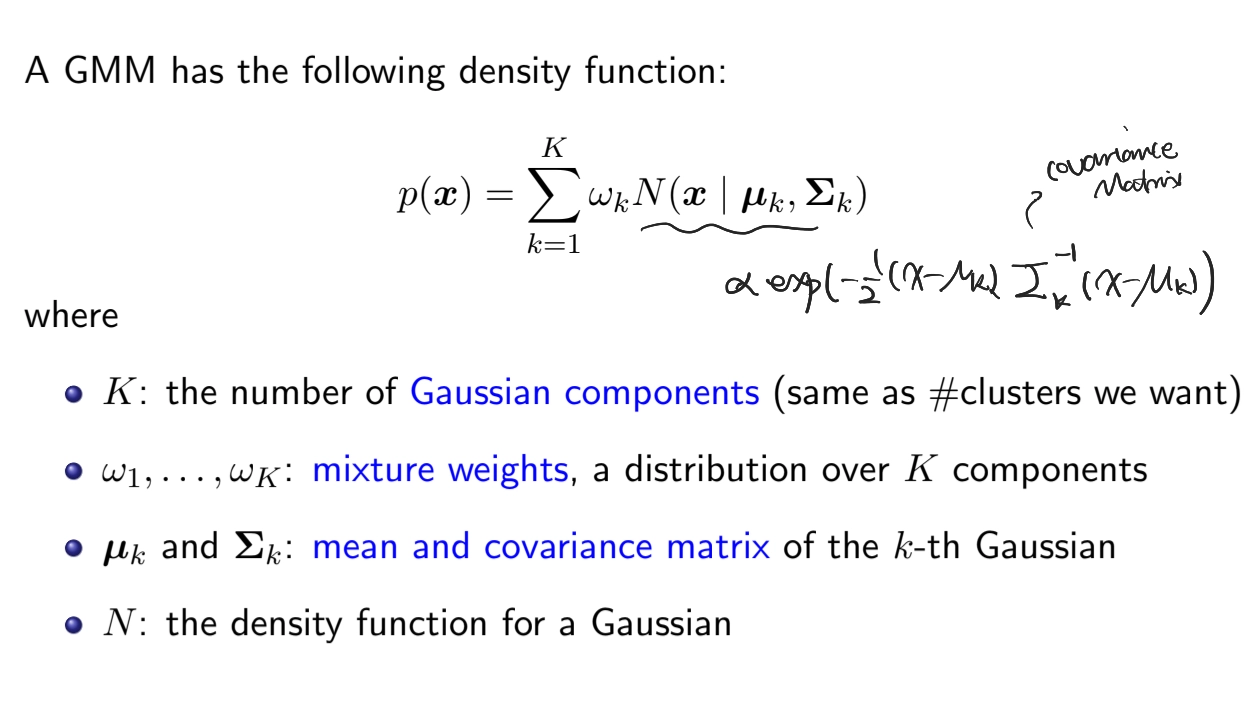
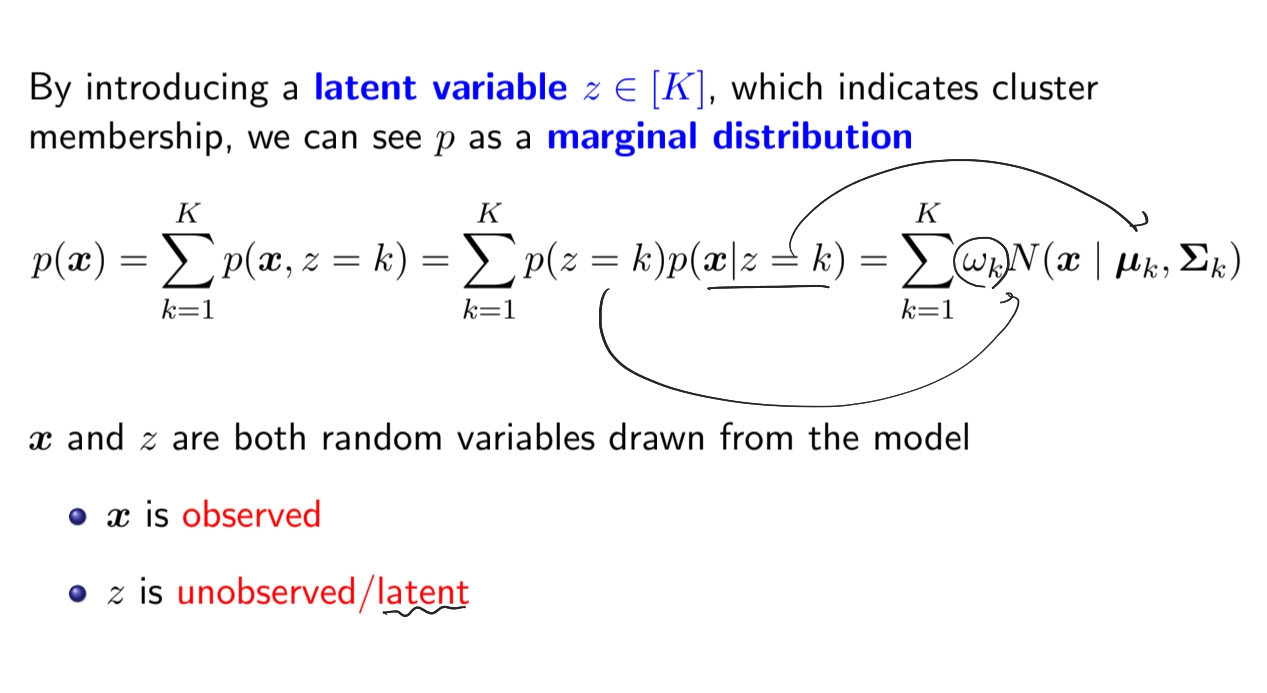
Learning GMMs
•
How to learn Parameters?
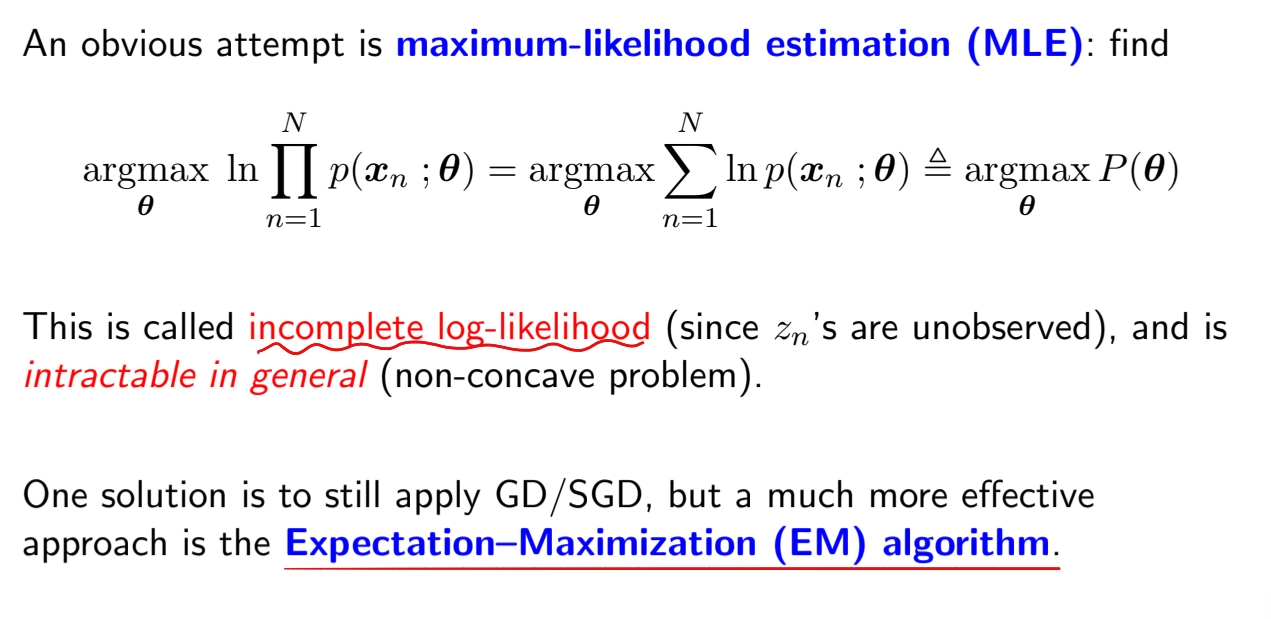
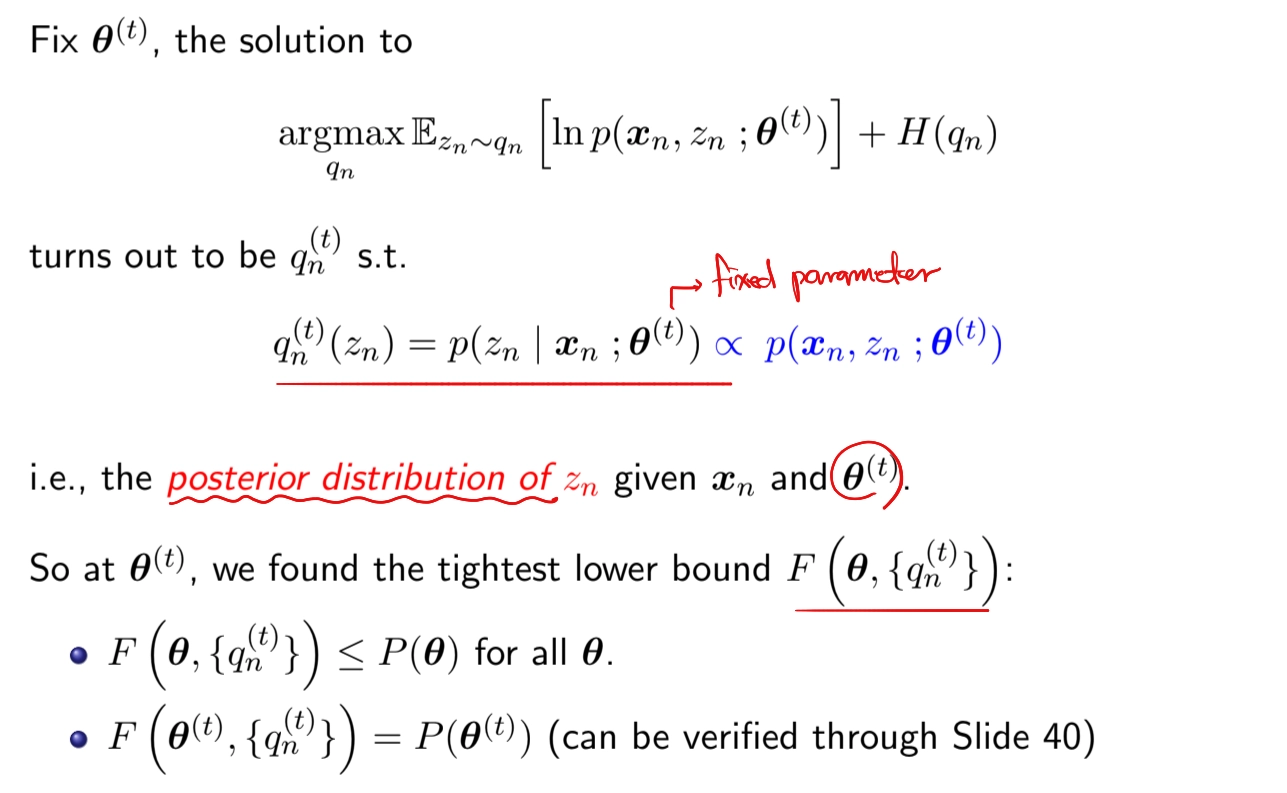
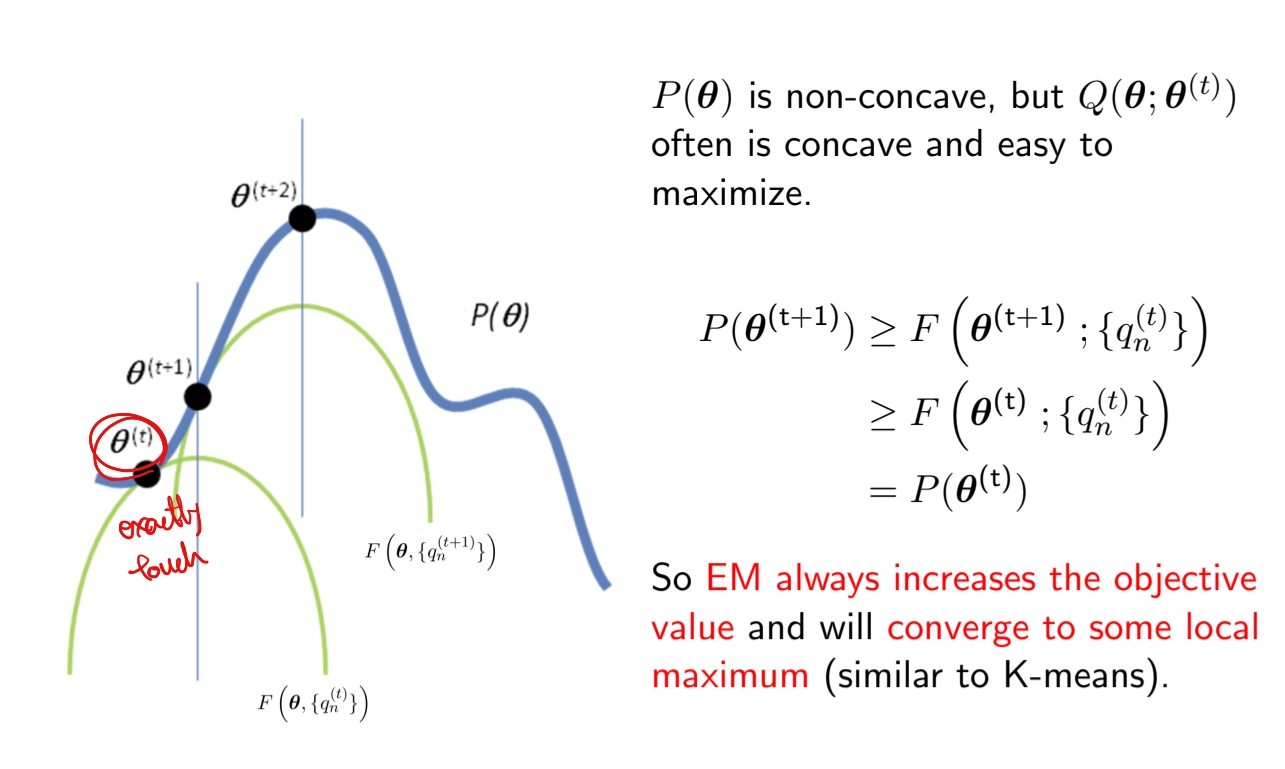
EM Algorithm
•
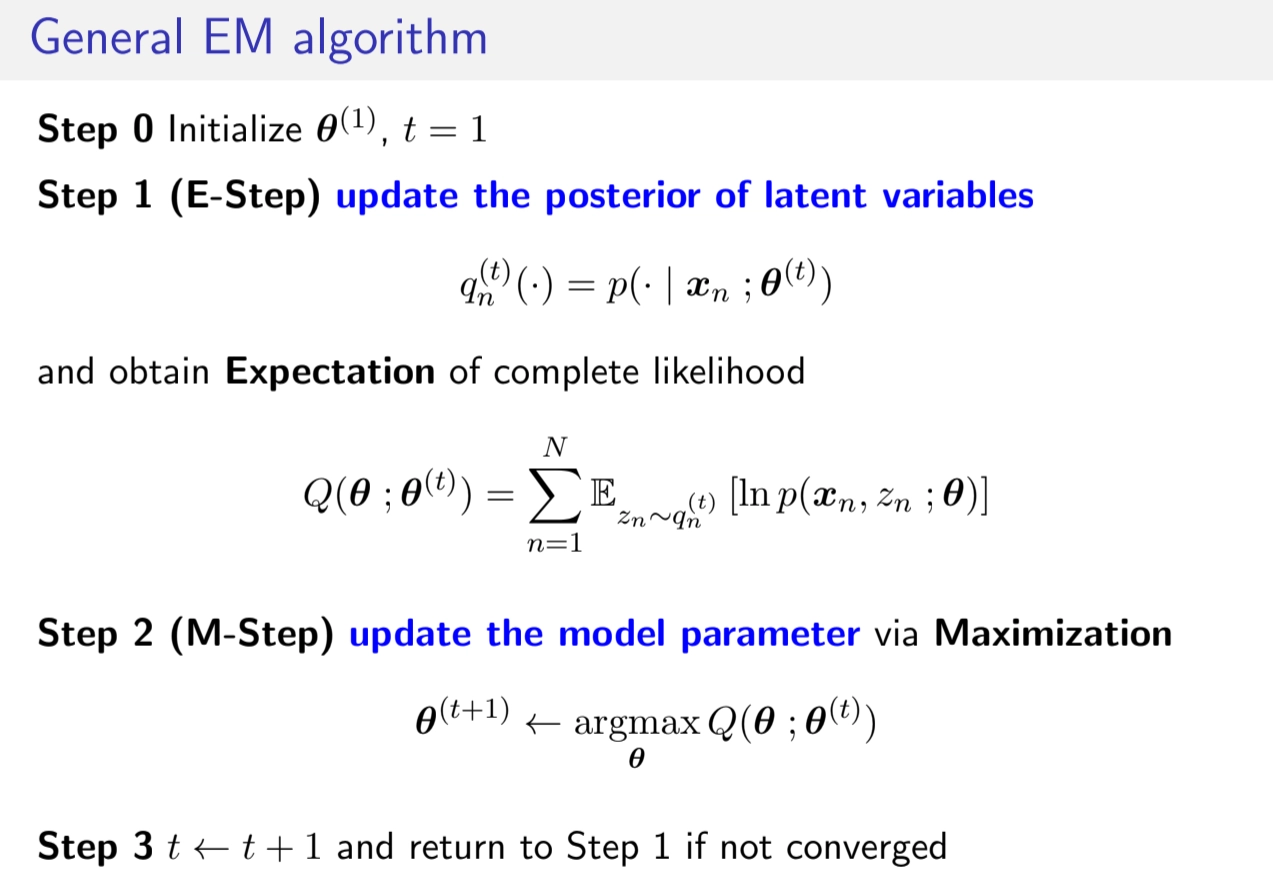
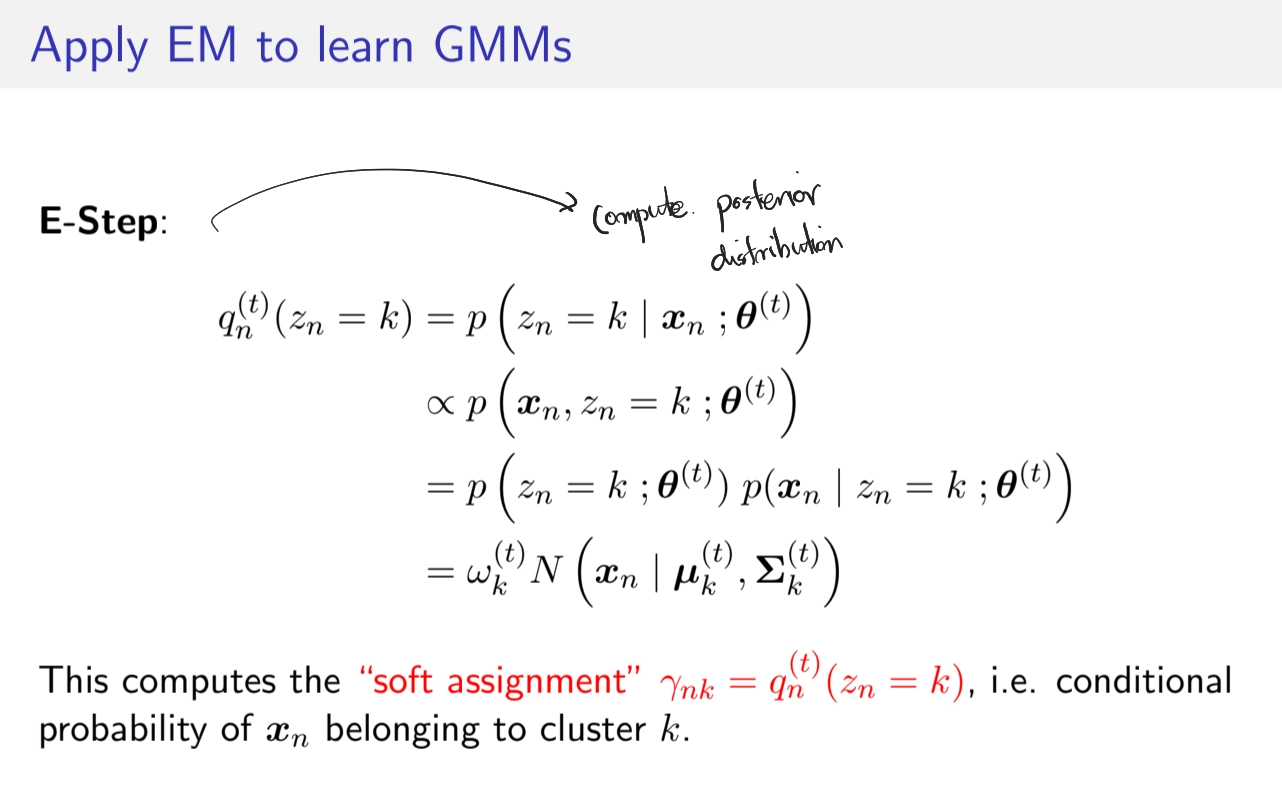
E-Step
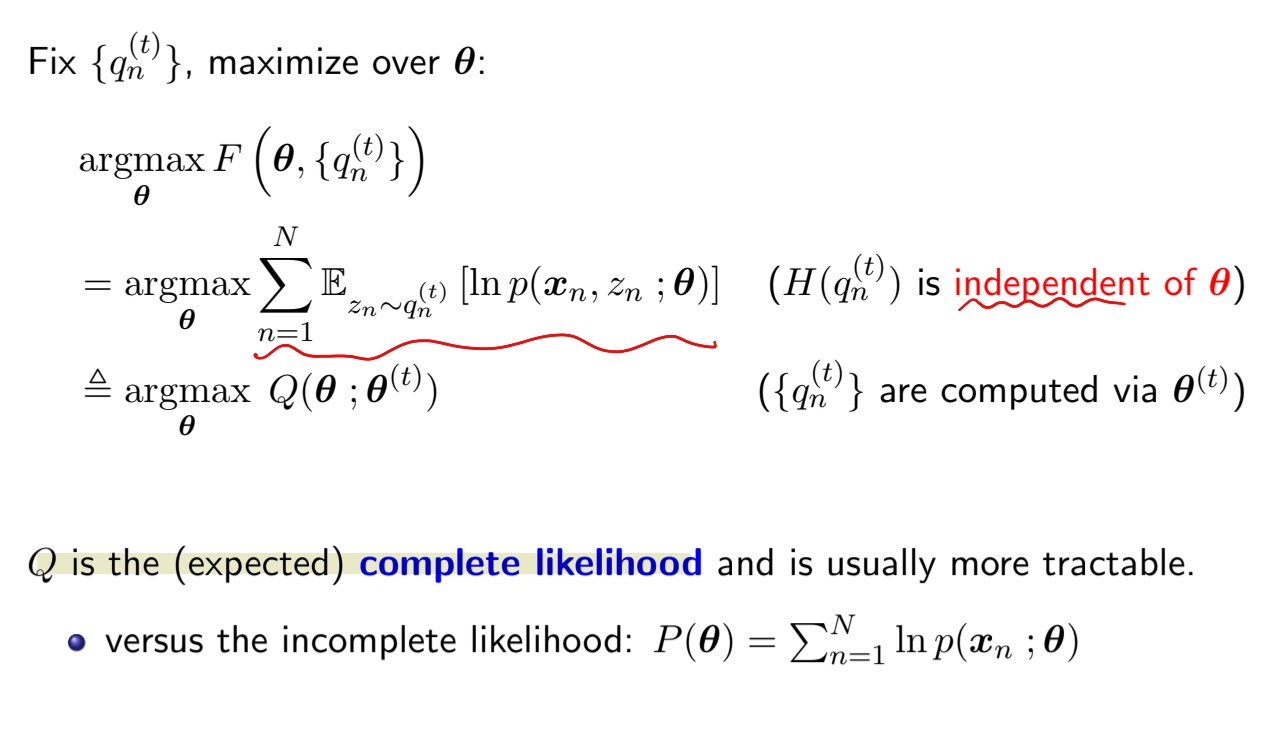
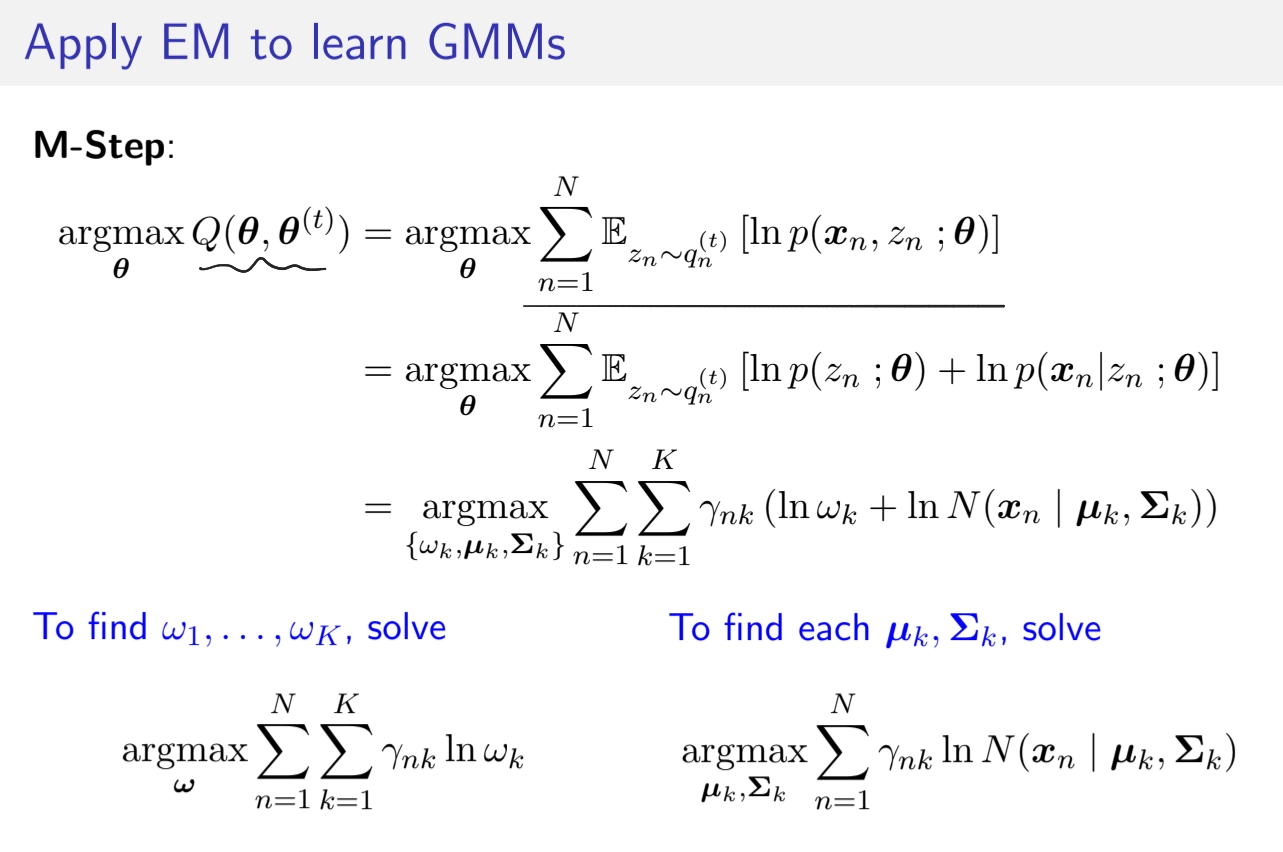
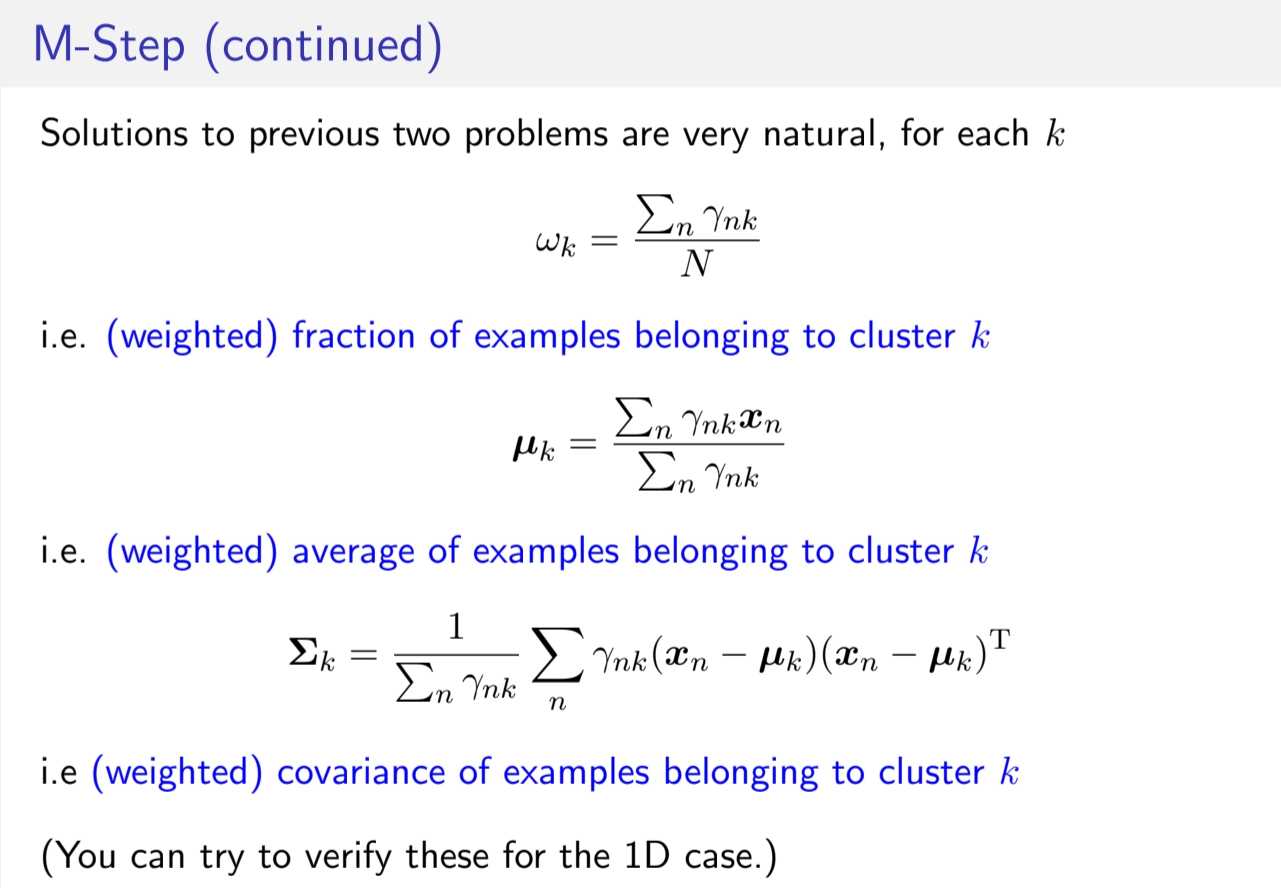
M-Step
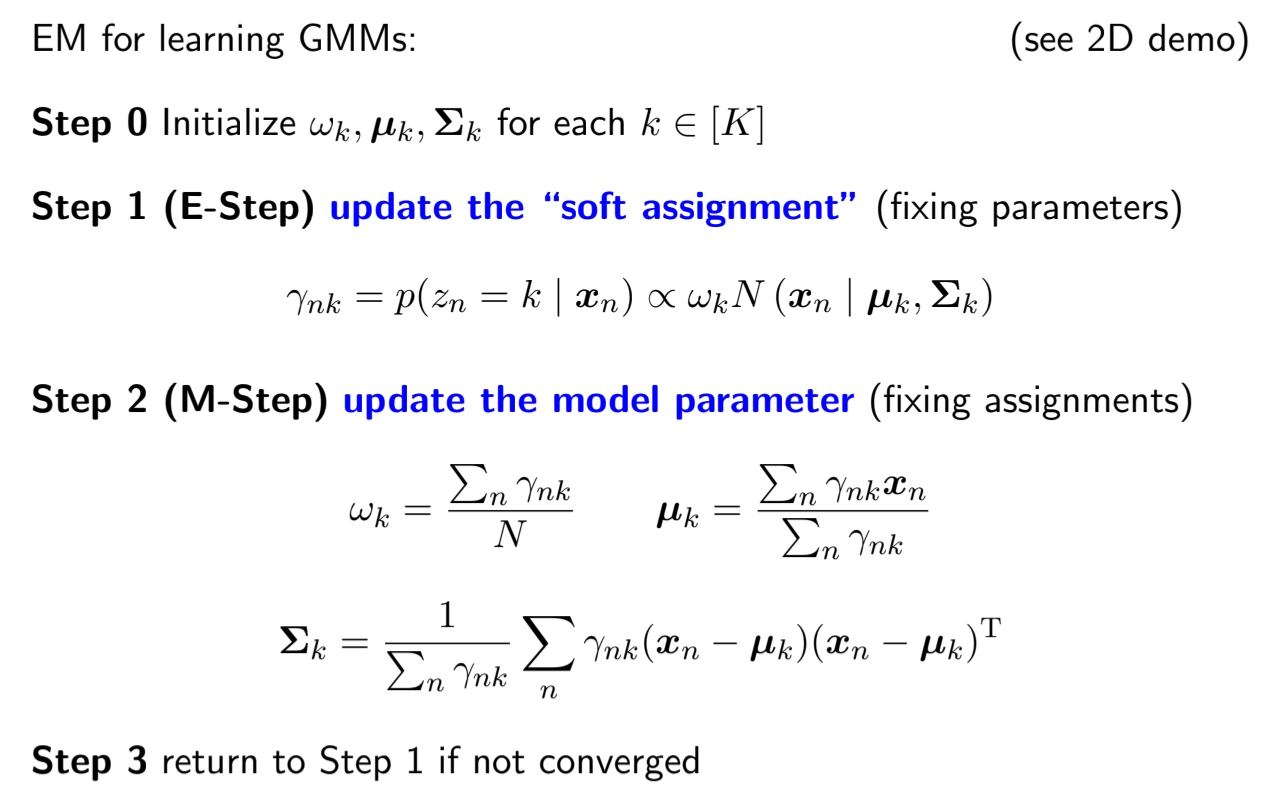
EM for Learning GMMs in total
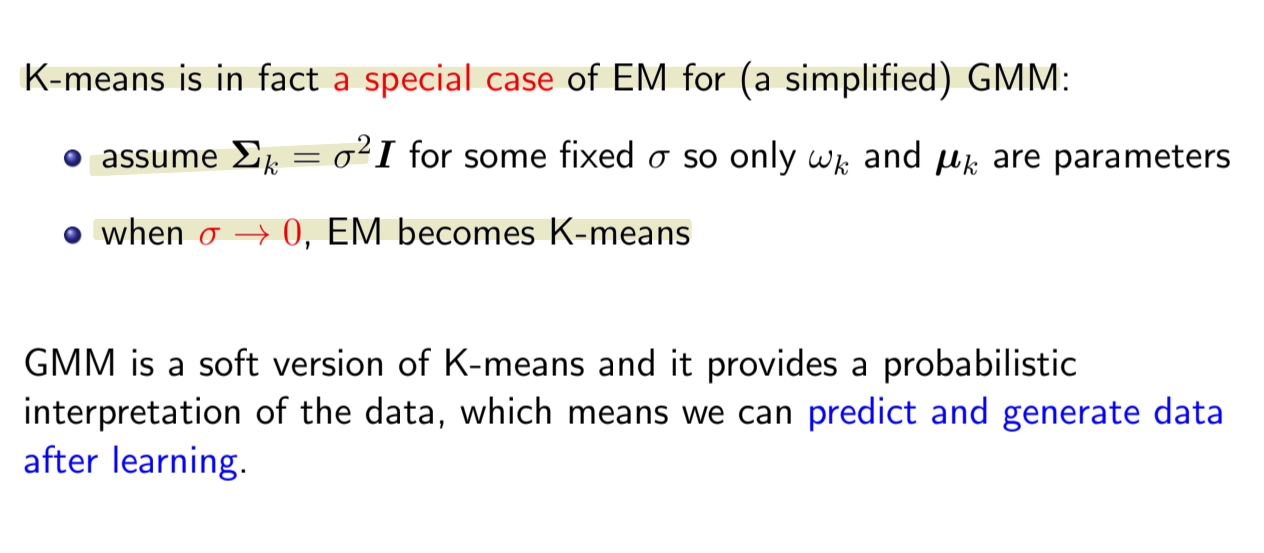
GMM and K-means
List view
Search